What to Eat Around Mt. Fuji
What to Eat Around Mt. Fuji
Essential Local Dishes You Shouldn’t Miss
Mount Fuji is not only a landscape.
It is also a food region shaped by
cold winters, volcanic soil, mountain water, and rural life.
Many travelers focus so intensely on seeing Mt. Fuji that they forget something equally important:
this is a place where food tells the story of how people live with the mountain.
This guide introduces the dishes that truly belong here—not trendy cafés or Instagram snacks, but foods that make sense because Mt. Fuji is here.
🍲 Houtou (Must-Try)— The Soul Food of Fuji’s Northern Side
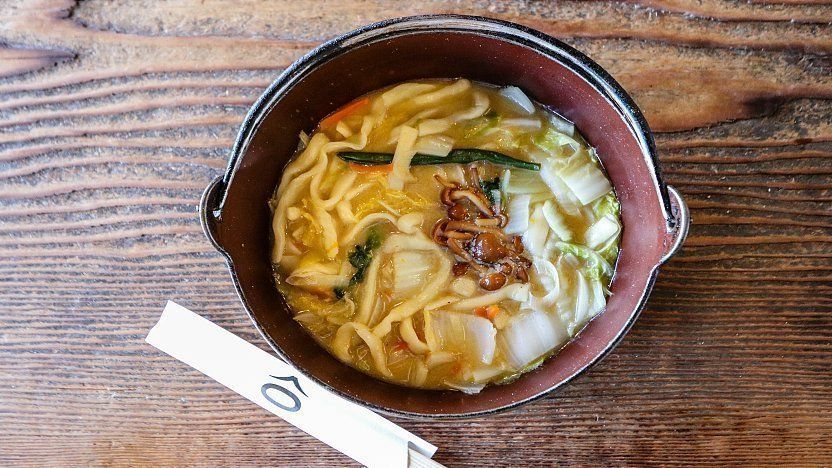
If there is one dish that defines the Fuji region, it is Houtou.
Thick, flat wheat noodles are simmered slowly in a miso-based broth with pumpkin, root vegetables, mushrooms, and seasonal greens.
It is filling, warming, and unapologetically rustic.
Why It Belongs Here
- Developed as a winter survival meal
- Uses local vegetables that grow well in volcanic soil
- Designed to keep the body warm in cold mountain climates
Houtou is not subtle cuisine.
It is food that says: “Sit down, slow down, and stay warm.”
Where You’ll Encounter It
Most commonly around Lake Kawaguchi, especially in family-run restaurants that have served the same recipe for decades.
🍜 Yoshida Udon — Strong Noodles for a Strong Climate
If Houtou is comforting, Yoshida Udon is stubborn.
Originating in Fujiyoshida City, these noodles are famously thick and firm—sometimes described as chewy to the point of resistance.
Toppings are simple:
- soy-based broth
- cabbage
- horse meat or pork
- chili miso
Why It Belongs Here
- High-altitude living demanded energy-dense meals
- Long working days favored food that stays filling
- Texture mattered more than elegance
This is not a dish designed to impress visitors.
It is designed to
fuel locals.
🔥 Fujinomiya Yakisoba — Where Technique Matters
On the southern side, Fujinomiya Yakisoba stands apart from other regional versions.
What makes it different?
- Steamed, firm noodles
- Pork fat instead of oil
- Sardine powder (fish flakes) added at the end
The result is smoky, savory, and deeply umami-rich.
Why It Belongs Here
- Influenced by Shizuoka’s coastal ingredients
- Developed around factory workers’ quick meals
- Perfect balance of texture and speed
This dish is best eaten hot, quickly, and without ceremony.
🥩 Local Beef & Pork — Simple, Honest, and Regional
While not as internationally famous as Kobe beef, Yamanashi and Shizuoka local meats are widely appreciated in the Fuji area.
You’ll often find them served simply:
- grilled
- sliced over rice
- paired with local vegetables
Why It Works
- Clean mountain water
- Cooler temperatures
- Less industrialized farming
Meals here favor clarity over complexity.
🍡 Sweets, Dairy, and Soft Comforts
The Fuji area is also known for gentle desserts rather than bold pastries.
Common examples include:
- milk puddings
- soft ice cream made with local dairy
- simple bean-based sweets
These are not meant to dominate the experience.
They are pauses—small rewards between landscapes.
🍵 Tea, Water, and the Quiet Details
Volcanic filtration gives the region exceptionally clean water, which shapes everything from noodles to tea.
Local green tea from Shizuoka, when paired with Fuji views, feels almost ceremonial—
not because of presentation, but because of
context.
Eating Well Around Mt. Fuji Is About Timing, Not Quantity
One of the most common mistakes travelers make is over-scheduling.
Around Mt. Fuji:
- Meals take longer
- Distances between restaurants matter
- Flexibility improves both visibility and dining experience
Often, one well-chosen local meal becomes more memorable than multiple rushed stops.
How Food Fits into a Thoughtfully Paced Fuji Day
When we design Fuji routes, food is not an afterthought.
We consider:
- weather windows
- driving distance
- meal types that match the day’s energy
A hot bowl of Houtou after a cold morning by the lake
often completes the experience more than another viewpoint.
Final Thought
To understand Mt. Fuji, you don’t just look at it.
You
eat where it feeds people.
The food here is not decorative.
It is practical, grounded, and shaped by the mountain itself.
And that is exactly why it belongs on your journey.
Suggested Reading
- When Is the Best Time of Day to See Mt. Fuji?
- Fuji from the North / West / South
- Makaino Farm: A Gentle Countryside Escape