📸 Fuji from the West: Wild Lakes, Quiet Shores, and Hidden Viewpoints
🌊 1. Lake Shoji(Shojiko)
Address (EN): Shoji, Fujikawaguchiko, Yamanashi
Address (JP): 山梨県南都留郡富士河口湖町精進
Lake Shoji is the smallest of the Fuji Five Lakes, but also one of the most intimate.
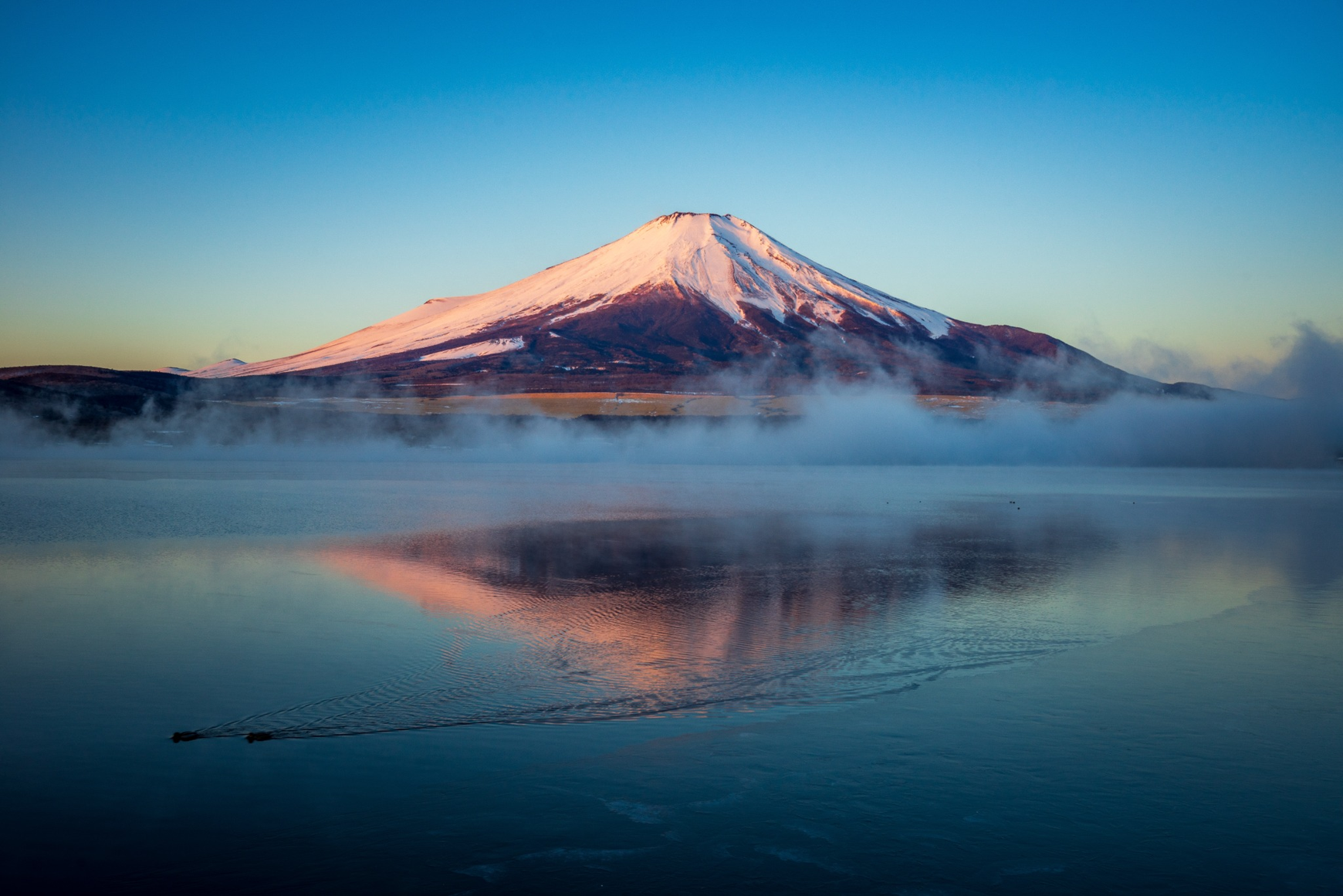
If Kawaguchiko feels open and familiar, Shojiko feels secluded, like a quiet clearing in the forest. The lake often rests in stillness during the early morning, surrounded by deep green slopes and a silence that seems to fall over the entire basin.
From many angles, Fuji rises softly above the hills behind the lake, creating a gently layered composition—foreground forest, mid-distance hills, and the mountain emerging beyond them. On calm days, the lake mirrors the sky so clearly that Fuji appears twice: once in the air, and once in the water.
Weather Insight
Shoji’s basin shape traps moisture, producing some of the region’s most beautiful morning conditions.
- Calm wind under 2 m/s → high chance of reflections.
- Cloud Base above 2,500m → full visibility of the summit.
- Morning mist appears often in early summer and autumn, usually lifting around 7:30–8:00 AM.
- Because the lake is small, temperature changes rapidly—fog can form and vanish within minutes.
Transportation Insight
- Bus routes reach Shoji but infrequently.
- Taxi is reliable for sunrise sessions or jumping between Saiko → Shoji → Motosu.
- Charter is ideal here, especially when scanning multiple lakes for the best light.
Photography Notes
- Wide angles emphasize the quiet scale of the lake; telephoto isolates the layered hills.
- The shoreline near the campgrounds provides some of the cleanest reflections.
- Shojiko is especially beautiful when Fuji is half-hidden behind drifting fog.
🌅 2. Lake Motosu(1000 Yen View)
Address (EN): Near Koan Campground, Motosu, Minobu, Yamanashi
Address (JP): 山梨県南巨摩郡身延町本栖 浩庵キャンプ場周辺
Of all Fuji’s lakes, Motosu has the deepest blue—so deep that it almost looks painted.
This is the lake printed on Japan’s 1000 yen bill, and when you stand on its shore, you realize why: Fuji rises above it with a clarity and dignity that feels timeless.
Motosu’s waters drop sharply, making the lake unusually transparent and still. On cold mornings, the surface becomes polished glass, holding a near-perfect mirror of Fuji. The symmetry is striking—so precise that the mountain seems to float.
Season Highlight
Late autumn and early winter bring the best reflections.
Cold air + no wind = mirror-like conditions around sunrise.
Weather Insight
- Cloud Base above 2,600–3,000m → ideal for full mountain visibility.
- Wind under 1.5 m/s → reflection window.
- Temperature inversion in winter produces exceptionally clear air.
- Western Fuji often forms a lenticular cloud cap—beautiful, but unpredictable.
Transportation Insight
- Access is more limited than other lakes; buses are infrequent.
- Taxi or charter is strongly recommended, especially before sunrise.
- Charter is preferred by most serious photographers due to the distance between viewpoints.
Photography Notes
- Sunrise is the most dramatic moment.
- Use a tripod with a remote trigger to maximize reflection sharpness.
- Try shifting left or right along the shoreline to match the composition of the 1000 yen bill—many photographers enjoy finding their own variation.
🌫 3. Lake Saiko – Western Shore
Address (EN): Saiko Lake, Fujikawaguchiko, Yamanashi
Address (JP): 山梨県南都留郡富士河口湖町西湖
Saiko is a lake of moods.
The forests surrounding it are denser, the shadows deeper, and the atmosphere quieter than the wider-open lakes of the north. Fuji appears slightly farther away here, but the perspective gives the mountain a calm, majestic atmosphere—especially on misty mornings.
When early fog drifts across Saiko, the combination of soft silhouettes, muted water, and Fuji emerging gently behind the haze creates one of the most contemplative scenes in the region.
Weather Insight
- Saiko often produces morning fog from spring to early autumn.
- Fog begins forming around 4–5 AM and disperses by 7–8:30 AM.
- Cloud Base above 2,500m keeps Fuji visible above the lower clouds.
- Wind rotates slowly within the basin—wait 10–15 minutes for clearer conditions.
Transportation Insight
- Buses access Saiko, but the best western viewpoints require walking.
- Taxi is efficient for lake-to-lake transitions.
- Charter allows inclusion of hidden forest edges and viewpoints inaccessible by public transit.
Photography Notes
- Misty conditions suit longer focal lengths.
- Reflections are rare but possible on windless days.
- Saiko is excellent for moody, atmospheric images rather than dramatic clarity.
⛰ 4. Mitsutoge Mountain(三つ峠山)
Address (EN): Mitsutoge Trailhead, Narisawa, Minamitsuru, Yamanashi
Address (JP): 山梨県南都留郡鳴沢村 三ツ峠登山口
Mitsutoge is one of the great Fuji viewpoints—a place long favored by professional photographers, painters, and even early mountaineers. From the summit ridgeline, Fuji rises across a vast sweep of forest, valleys, and small towns. The composition is grand but serene, powerful but not overwhelming.
The climb is steady and moderate, and the reward is a clear, elevated perspective that shows Fuji in its full scale. On cloudless mornings, the mountain seems to glow. On hazy days, the entire landscape softens into gentle layers.
Weather Insight
- Cloud Base above 2,800m is ideal due to the high vantage point.
- Autumn and winter provide the clearest conditions.
- Mountain winds can shift quickly; Fuji may reappear within minutes after disappearing.
- Cold air at altitude produces crisp edges on the mountain’s ridges.
Transportation Insight
- Bus access to trailhead is limited; taxis are common for early hikes.
- Charter is excellent for sunrise hikes or multi-day photography routes.
- The trail requires proper footwear and preparation—especially in winter.
Photography Notes
- Wide-angle lenses capture Fuji with the surrounding valley.
- Telephoto lenses emphasize the mountain’s ridge lines and shadow textures.
- Sunset produces long, dramatic shadows across the forest below.
🌤 West Side Weather Summary
- Best visibility: autumn and winter
- Ideal cloud base: 2,500–3,000m
- Mist windows: Shoji (7–8 AM), Saiko (6–8 AM)
- Reflection likelihood highest at Motosu with wind under 1.5 m/s
- Western Fuji may form lenticular clouds more often than north-facing slopes
🚕 West Side Transportation Summary
- Buses exist but are infrequent
- Taxis are the most flexible for lake-to-lake movement
- Charter services allow full control over timing and location—important due to the fast-changing western weather
- Hiking routes like Mitsutoge require planning and early departure
Closing Note
If the north side of Fuji offers balance and familiarity, the west side offers solitude and depth.
Here, the mountain feels more ancient—its slopes more textured, its lakes more reflective, its mornings more unpredictable.
For photographers, the west is where Fuji becomes a landscape of patience and discovery.
Our journey continues southward next, where the mountain opens into plateaus, farmlands, and wide horizons.