Mt fuji and Kawaguchiko Autumn Guide
🍂 When Does Autumn Arrive at Kawaguchiko?
Colors begin to shift in late October, but the true peak usually lands between early and mid-November. If you want the most stable combination of deep red maples and clear skies, the period from November 7 to 14 is consistently reliable. By late November, many leaves near the Maple Corridor begin to fall, though other parts of the lake remain colorful a little longer.
Kawaguchiko is a wide area. Even if one location is slightly past its peak, another often looks just right.
🍁 The Best Places to Experience Autumn at Kawaguchiko
These descriptions aren’t copied from brochures—they’re based on the feeling of actually standing there, often before most people arrive.
🍁 Maple Corridor (Momiji Corridor)
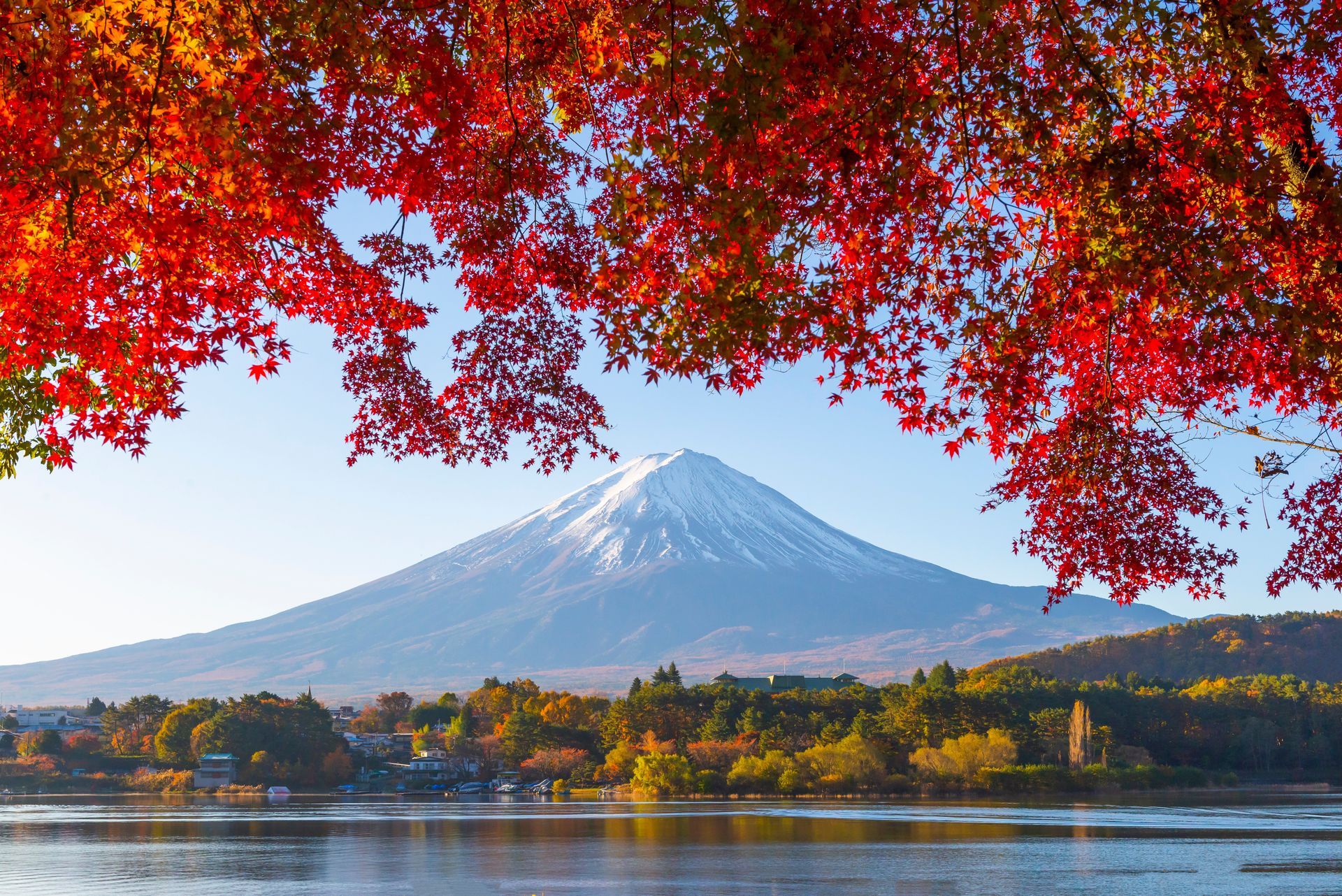
Most travelers have seen photos of this place long before arriving in Japan. The Maple Corridor is a long footpath running alongside a small river, shaded by tall maple trees that arch overhead. At the height of autumn, the entire walkway glows in soft reds, oranges, and golds. The ground becomes a rustling carpet of leaves, and you’ll hear the gentle sound of the river flowing beside you.
If you visit early in the morning, there’s a calmness that almost feels unreal. Shops are still closed, the air is cool and slightly damp, and sunlight slowly filters through the branches. Later in the day, the atmosphere shifts. More visitors arrive, couples wander hand in hand, photographers set up tripods, and the walkway becomes lively.
Both moods have their charm, but arriving before 9 AM lets you appreciate the place in its quieter form.
🌅 Oishi Park (Oishi-koen)
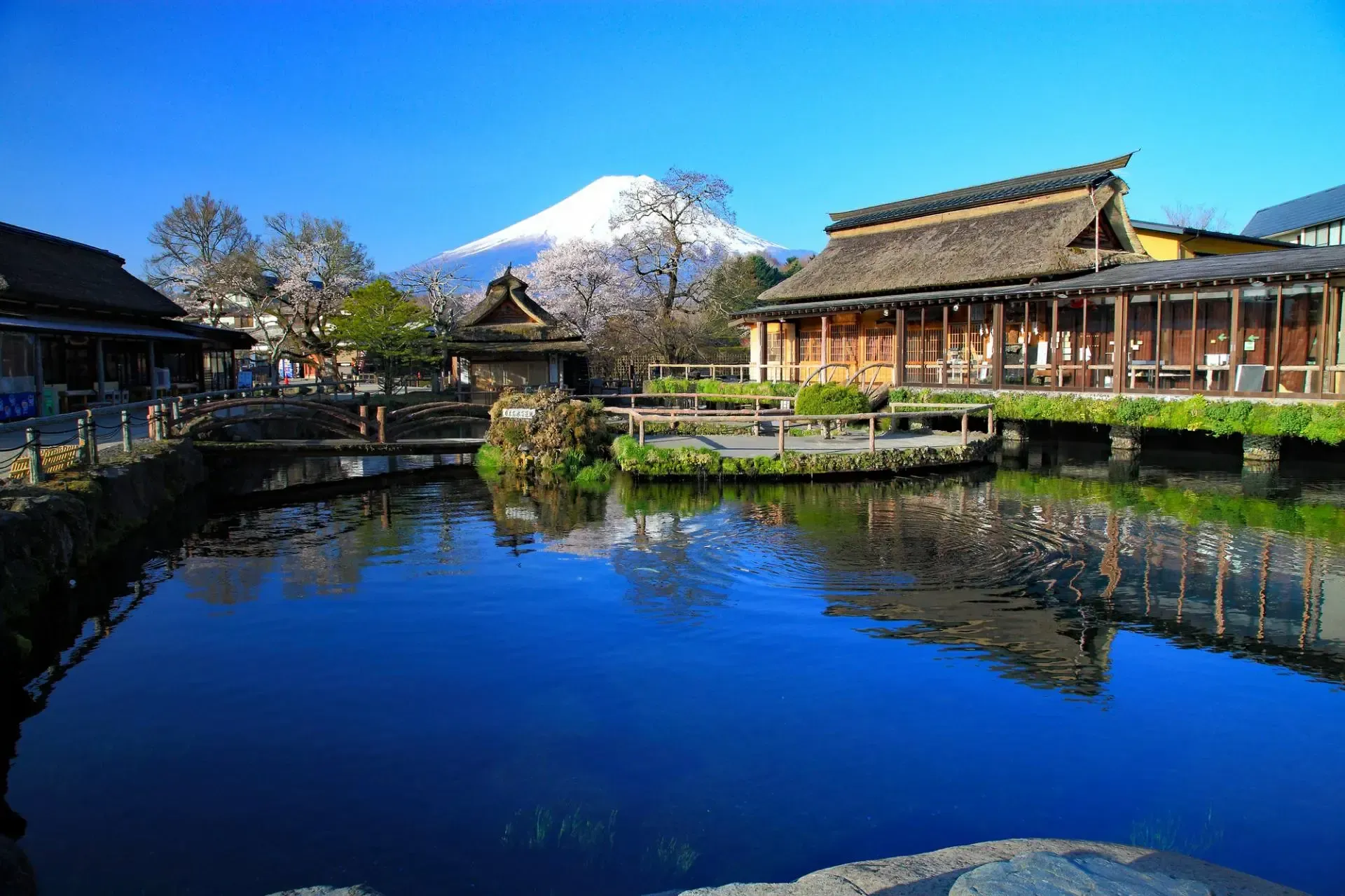
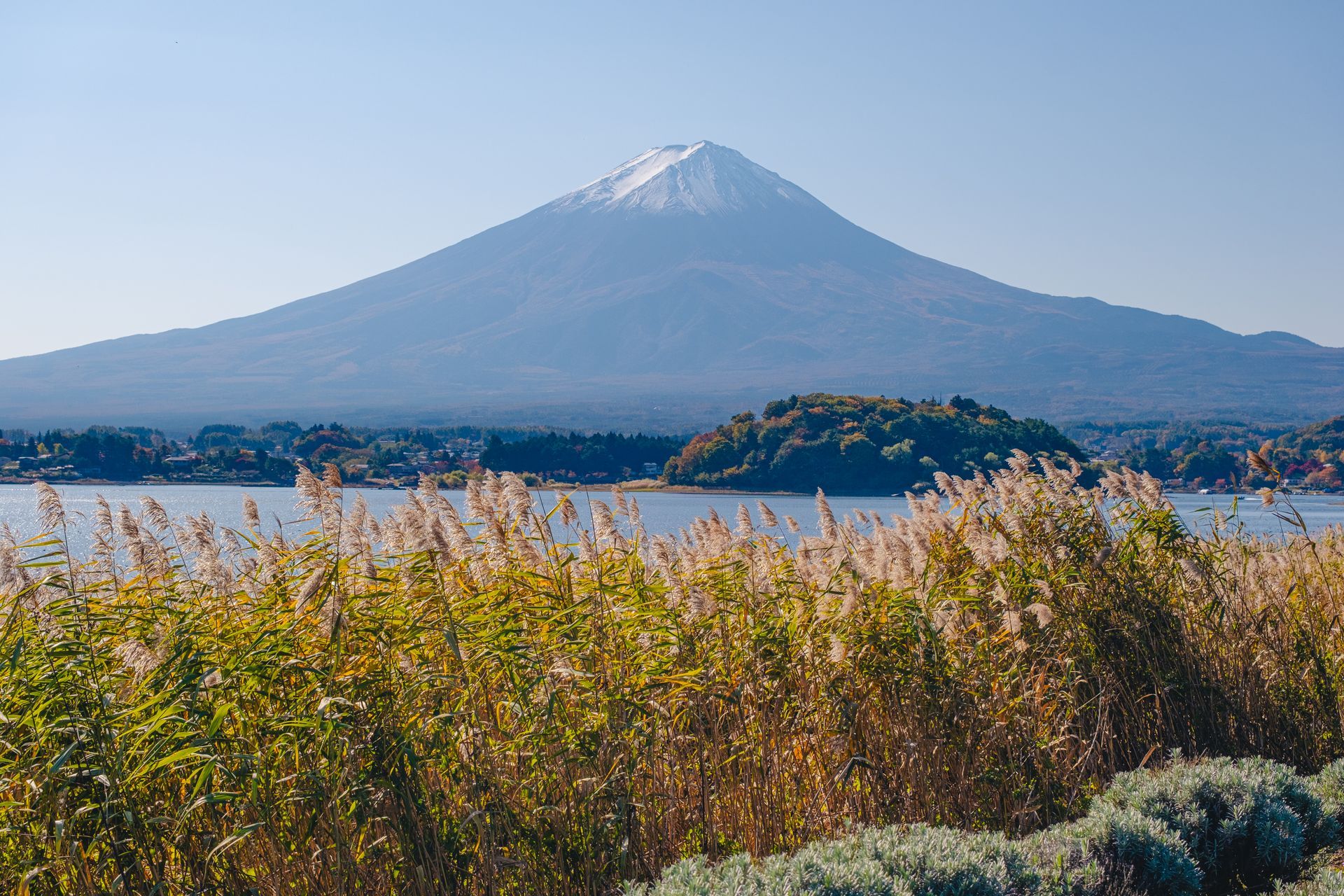
Oishi Park is one of the most forgiving places to photograph—almost every angle looks good. The park sits along the northern shore of the lake, giving it a wide, unobstructed view of Mt. Fuji 🗻 across the water. In autumn, the flower beds transition to deep red Kochia and warm seasonal colors that frame the lake beautifully.
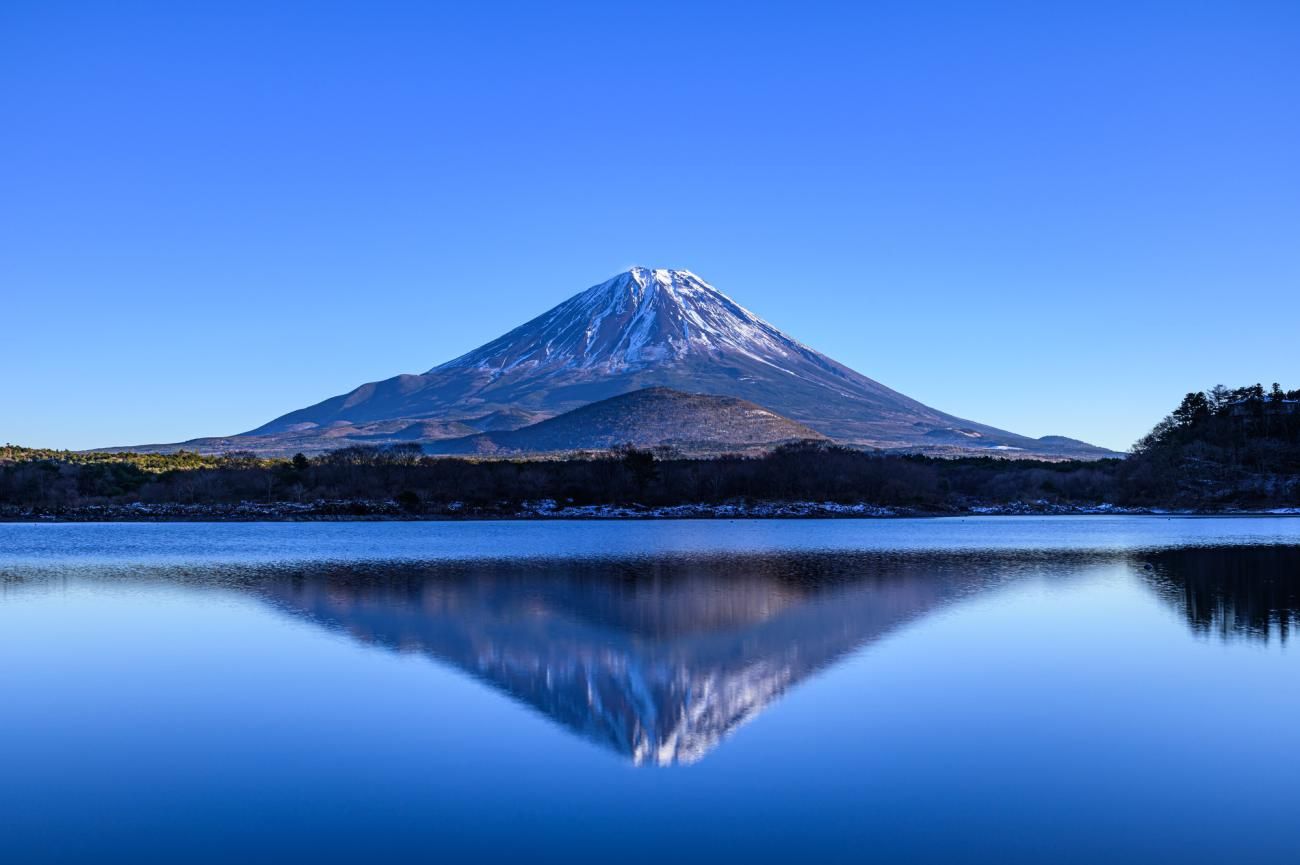
On calm mornings, Fuji’s reflection sometimes appears on the surface of the water. The breeze from the lake can be cold in November, but it also clears the view, giving the mountain a very crisp outline. Visitors often take their time here, walking slowly along the lakeside path or just sitting on a bench watching the scenery change with the light.
🍂 Saiko Iyashi-no-Sato Nemba
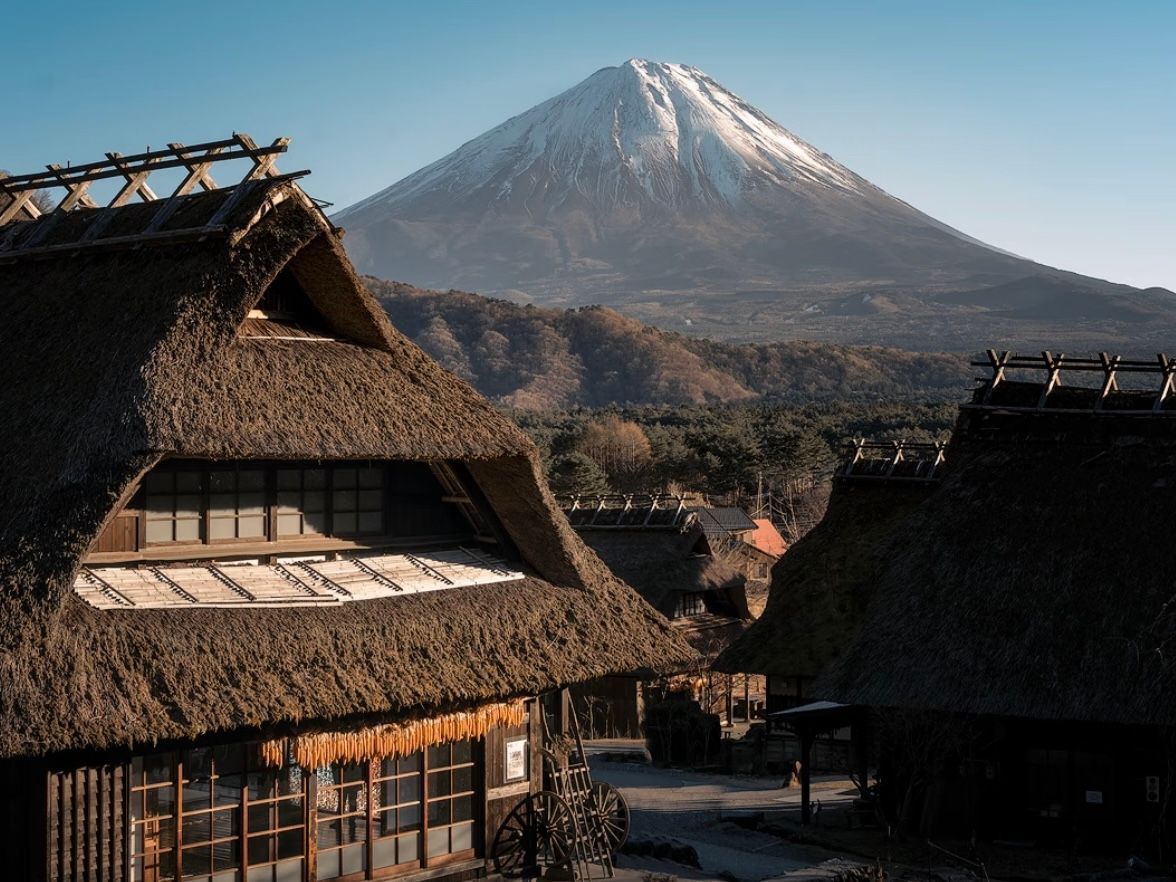
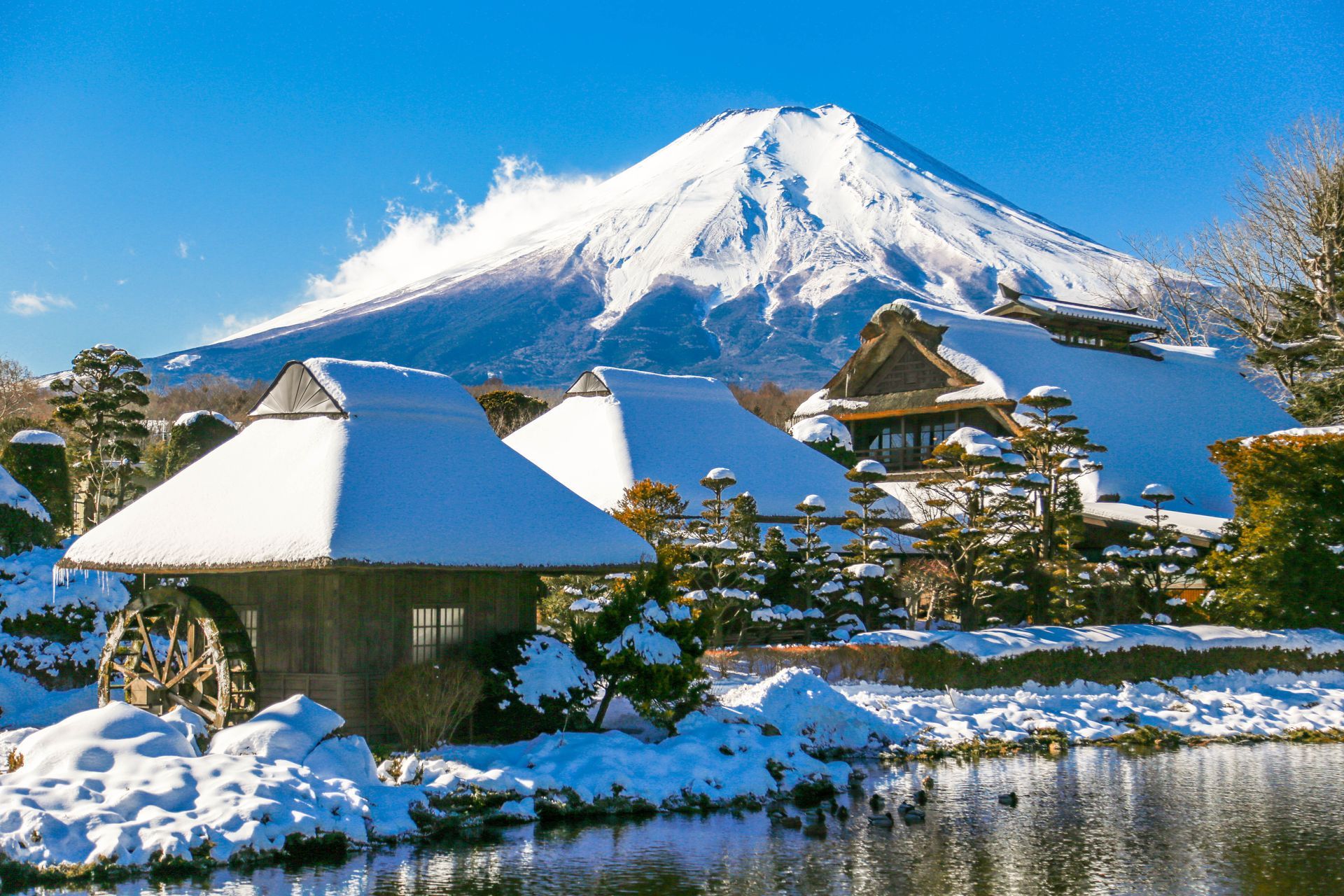
This traditional thatched-roof village offers a quieter type of autumn beauty. Set against the mountains, the village is filled with old wooden houses restored to resemble a historical farming community. In autumn, the slopes behind the village turn warm shades of red and orange, creating a gentle, nostalgic backdrop.
If the weather cooperates, Mt. Fuji appears directly behind the houses. On clear days, the view feels timeless—like something from a period film. Inside the houses, you can smell wood and tatami, and some workshops let you try crafts or kimono. Compared to the busier lakefront areas, this village has more space and a slower atmosphere, which many travelers appreciate.
🛕 Chureito Pagoda
The well-known “red pagoda and Fuji” photo comes from here, but in person, the experience is fuller than the photograph suggests. To reach the viewpoint, you climb a long staircase—around 398 steps—but the climb itself is part of the atmosphere. You hear the city below, the wind in the trees, and the steady rhythm of other travelers climbing with you.
In autumn, the trees around the pagoda turn deep red, making the contrast with the pagoda even stronger. If you visit early, you’ll find a soft, peaceful quiet at the top. Later in the day, it becomes busy, but the panoramic view of Fuji and the city is still worth the effort.
🗻 How to Check Mt. Fuji Visibility Before You Go
This is one of the most important parts of planning your day. Fuji can hide behind clouds even on a “sunny” forecast, so general weather apps aren’t enough.
Here’s what we actually check every morning:
Live Cameras
Search “富士山 ライブカメラ”.
This is the most accurate method. You’ll see exactly what it looks like right now.
Windy App
Switch to the Cloud Base or Visibility layer.
If the cloud base is low, Fuji may be hidden.
Tenki.jp
The Japanese weather website often predicts cloud movement better than global apps.
Search “富士山 天気”.
Simple local rule
North wind often brings clear skies.
South wind usually pushes clouds toward Fuji.
🍁 A Practical Autumn Day Trip Itinerary
A smooth day depends more on timing than on how many places you visit.
Here’s a plan we often use for guests:
8:00 – Leave Tokyo
10:00 – Saiko Iyashi-no-Sato Nemba
11:20 – Oishi Park
12:20 – Maple Corridor
13:30 – Lunch or café
14:30 – Chureito Pagoda
15:30 – Return to Tokyo
17:00 – Arrival (later on weekends)
How to Reach Kawaguchiko
Highway Bus
The simplest option for most travelers.
Buses from Shinjuku, Shibuya, and Tokyo Station go directly to Kawaguchiko Station.
Book via HighwayBus.com or JapanBusOnline.
You’ll receive a QR code—no need to print anything.
Morning buses during November can sell out several days ahead, so booking early is best.
For the return trip, the afternoon departures (especially 3–5 PM) fill very quickly.
A round-trip ticket saves you from long queues.
Getting Around the Lake
After arriving at Kawaguchiko Station, you can buy a one-day pass for the sightseeing buses.
Red Line
Runs along the lake and stops at Oishi Park.
Very popular from late morning onward.
Green Line
Heads toward Saiko and the thatched-roof village.
Usually calmer and less crowded.
Buses may run slightly behind schedule during the peak of autumn. If possible, move earlier in the day to avoid crowds.
What to Wear
Late October to early November feels cool, especially near the lake.
By mid-November, mornings can be quite cold, and a warm jacket becomes essential.
Layers are helpful because the temperature changes quickly between morning and afternoon.
Final Thoughts
Kawaguchiko in autumn has a rhythm of its own. The lake is calm in the morning, the maples glow in the midday sun, and Fuji appears and disappears behind drifting clouds. With a bit of timing, a good visibility check, and a willingness to explore beyond the busiest hour, your day here can feel unforgettable.